 DunwoodyCommercial Stucco & EIFS
- Home
- Services
- Waterproofing & Sealants
Commercial Waterproofing in Dunwoody, GA
On Dunwoody’s office, retail and multifamily buildings, most leaks come through the joints and transitions, not the stucco itself. We replace failed sealant, correct flashing at windows, parapets and roof-to-wall details, and apply coatings that keep the envelope shedding water.
- Sealant replacement programs
- Expansion joint repair
- Flashing & parapet details
- Elastomeric & breathable coatings
Request a commercial quote
Dunwoody commercial stucco & EIFS. Property managers, boards, owners & builders.
Dunwoody leaks start at the joints
A stucco or EIFS wall is only as watertight as the sealant and flashing around it. On the offices and hotels around Perimeter Center, that means hundreds of linear feet of perimeter sealant at window walls and panel joints. On the shopping centers along Mount Vernon Road and in Dunwoody Village, it means storefront frames, sign penetrations and parapet copings. On the city’s apartment and condo buildings, it is balcony ledgers, breezeway transitions and the joints between floors.
Sealant has a service life. After years of Georgia sun on a south or west elevation it hardens, loses adhesion and splits, and water that used to run off the face of the building follows the joint into the wall. Flashing that was missing or lapped the wrong way when the building went up does the same at every window head and roof-to-wall transition.
We survey those details, test adhesion on existing sealant and water test where a leak path needs confirming. The scope is then written by elevation: joint replacement with proper backer rod and primer, flashing corrections, and, where the wall needs it, an elastomeric or breathable coating chosen for that substrate.
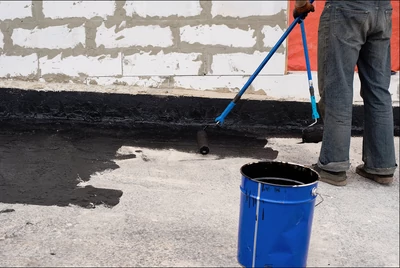
Commercial waterproofing work in Dunwoody
These are the details we check and correct on office, retail, multifamily and hospitality buildings.
Sealant replacement programs
Old sealant is cut out, joints cleaned and primed, and new backer rod and sealant installed, building-wide or elevation by elevation.
Expansion joints
Failed expansion and control joints are rebuilt and sized so the joint can move with the building instead of tearing.
Window & storefront perimeters
Perimeter sealant, sill flashing and head details are corrected so water running down the wall is turned out, not in.
Parapets & roof-to-wall
Parapet caps, coping joints and roof-to-wall flashing are corrected where water enters the top of the wall.
Elastomeric & breathable coatings
Elastomeric coatings to bridge fine cracks, or breathable coatings where the wall needs to dry outward, chosen for the substrate.
Penetrations & attachments
Tenant signage, light fixtures, mechanical lines, railings and balcony attachments are flashed and sealed where they pass through.
Choosing the right waterproofing scope
A coating can’t fix a missing flashing, and new sealant won’t help a parapet whose cap is open. We start with the details where water is actually getting in, and only recommend a coating when the face of the wall needs one.
Coating choice matters too. Elastomeric coatings bridge hairline cracks and shed rain well, but a non-breathable film over a wall that is already wet can trap moisture. Where readings show wet areas, we repair those first.
For sealant, the question is usually full program or targeted repair. If the joints are the same age everywhere, replacing them in one program is usually the better value. If failures are concentrated on one or two elevations, we can phase the work so it fits operating budgets or reserves.
| Scope | Best for | Result |
|---|---|---|
| Targeted sealant repair | Failures on one elevation | Leaks closed |
| Full sealant program | Joints the same age everywhere | Building resealed |
| Flashing correction | Parapet & opening leaks | Water turned out |
| Elastomeric coating | Sound wall, many hairline cracks | Cracks bridged |
| Breathable coating | Dry stucco needing protection | Sheds rain, dries out |
How we waterproof an occupied building
Sealant and coating work depends on weather and cure time, so we plan the sequence and access with you before work starts.
Survey & test
We walk every elevation, check sealant adhesion and condition, take moisture readings at windows and joints, and water test where tenants have reported leaks.
- Sealant condition by elevation
- Moisture readings mapped
- Leak points confirmed
Scope & phasing
You get an itemized scope that separates active leak repairs from preventive work, with phasing options by elevation or by building.
- Itemized by elevation
- Program or targeted options
- Access & scheduling plan
Seal, flash & coat
Failed joints come out and are rebuilt, flashing is corrected, any wet substrate found along the way is replaced, and coatings go on where the wall needs them.
- Joints primed & tooled
- Flashing corrected
- Daily cleanup
Tenants reporting leaks after storms?
That usually points to a joint or flashing detail. A water test can confirm the source before you commit to a full program.
Often paired with waterproofing
Sealant and flashing work often turns up damage that has to be repaired first, or a wall that should be tested before anything is sealed.
Envelope Inspections
Moisture surveys, water testing and written condition reports for owners, boards, lenders and buyers.
Learn more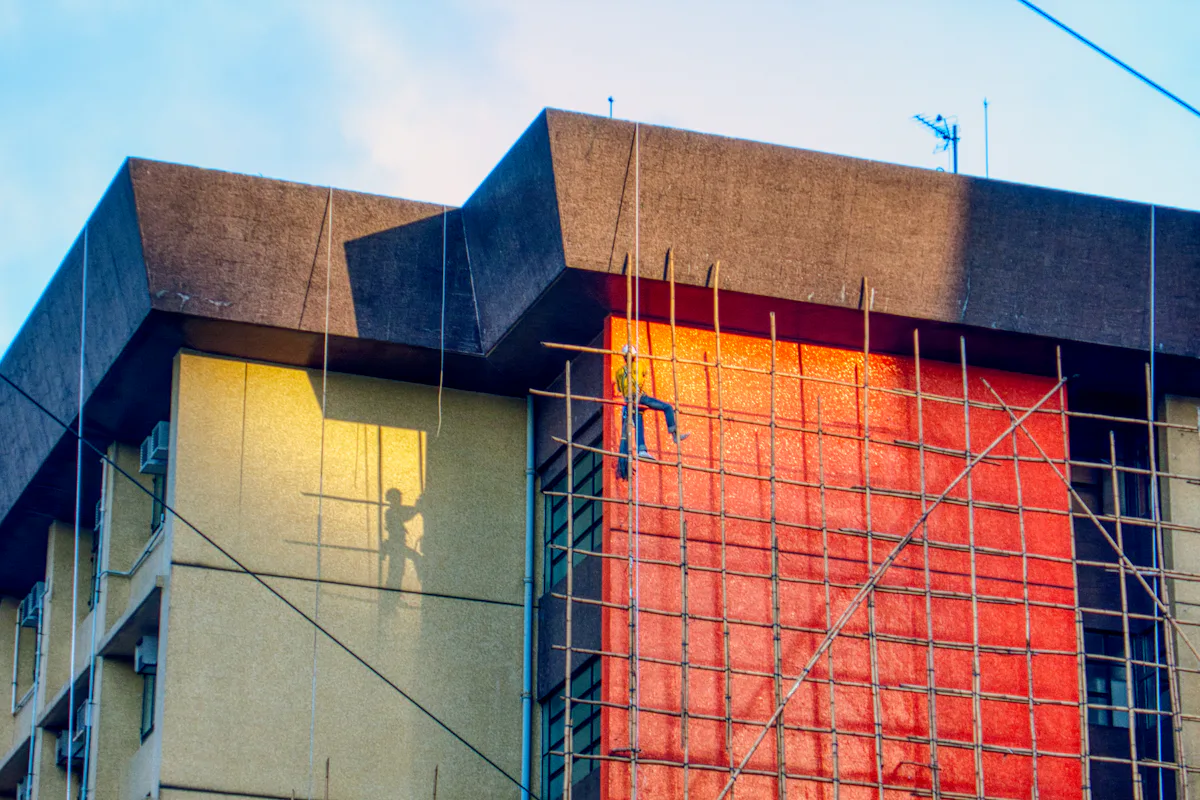
Commercial Stucco Repair
Cracks, impact damage, delamination and water damage on commercial facades, repaired at the source and matched to the building.
Learn more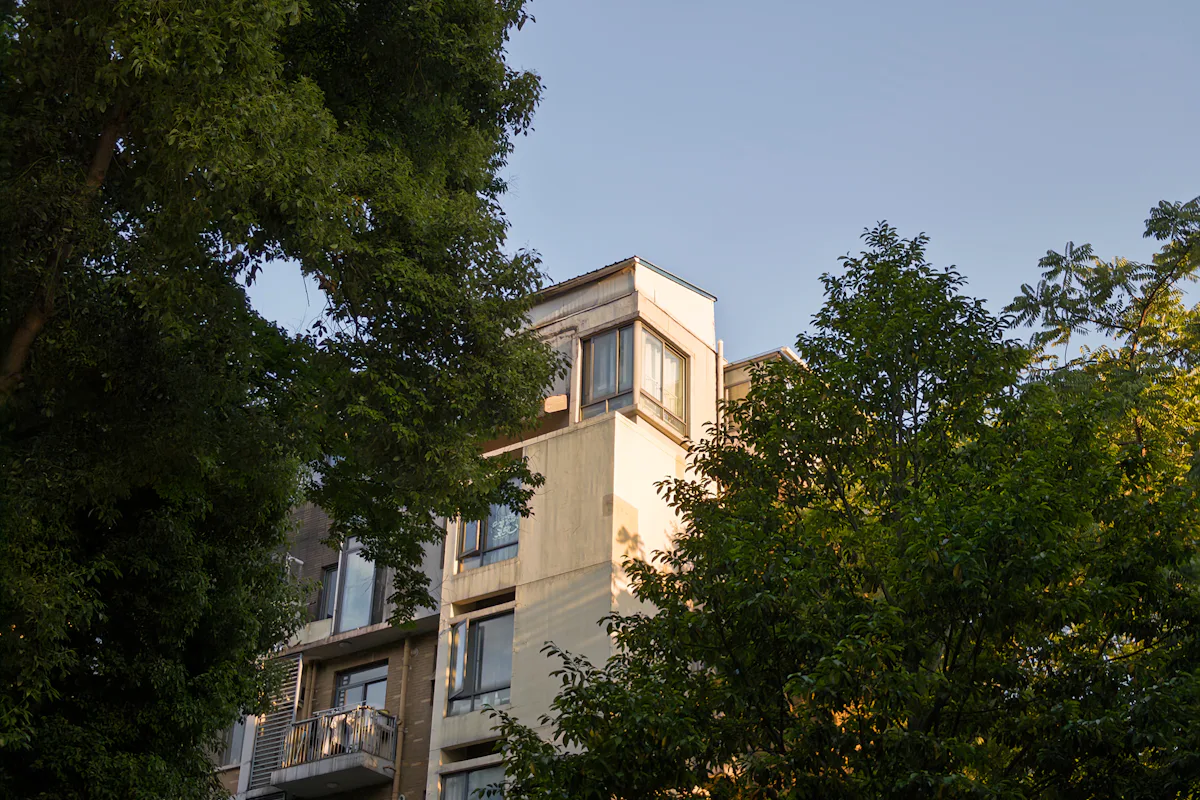
Condominiums & HOAs
Reserve-study repairs, balconies, sealants and full-building recoats for condominium associations.
Learn moreWhat Georgia storms do to exposed elevations
Taller buildings in Dunwoody see more wind-driven rain on their upper floors than a one-story building ever will.
Summer thunderstorms in north DeKalb often arrive fast with strong gusts, driving rain sideways into window heads, panel joints and parapet caps. On the mid-rise and high-rise buildings around Perimeter Center, the upper floors and corners take the worst of it, and that is where we usually find the first failed sealant. Long humid stretches then slow drying, so water that gets in tends to stay in. A waterproofing scope for a Dunwoody building is planned around which elevations face that weather.
Window wall perimeters
Perimeter sealant on ribbon windows and window walls, replaced with compatible materials and proper joint design.
Parapets & copings
Coping joints, parapet caps and roof-to-wall transitions corrected so water stays out of the top of the wall.
Expansion joints
Building and floor-line expansion joints on mid-rise and multifamily buildings, rebuilt to move without leaking.
- Dunwoody
- Perimeter Center
- Peachtree-Dunwoody corridor
- Ashford-Dunwoody corridor
- Dunwoody Village
- Mount Vernon Road
- Sandy Springs
- Brookhaven
- Chamblee
- Peachtree Corners
Waterproofing questions from Dunwoody buildings
What Dunwoody property managers and boards ask about sealants, flashing and coatings.
Is stucco waterproof?
How often should sealant joints on a commercial building be replaced?
Can you replace sealant on a taller Perimeter Center building without disrupting tenants?
What is the difference between elastomeric and breathable coatings?
Does a waterproofing project in Dunwoody need a permit?
How is commercial waterproofing priced?
Stop the leak, not just the stain
Tell us where water is showing up. We will survey the joints and flashing and send a written waterproofing scope for your Dunwoody building.